By Casey Stegman /
Great noir is all about contrasts. In the classic film noirs of the ’40s and ’50s, this contrast is best exemplified by those iconic black and white shots with a stark divide between light and shadow. But it’s also evident in classic and contemporary noir literature through the choices characters make. Characters who are trying hard to go down one road but then give in to temptation or greed or are blinded by loyalty and soon find themselves on a one-way street heading toward ruin. Walter Huff in James M. Cain’s Double Indemnity, as a primary example. It’s also found in the locations in which these stories are set. An author reveals a seedy world in a place that is, on its face, anything but. James Ellroy, Michael Connelly, and Jordan Harper have made careers out of showing us just how hellish the City of Angels can be, as another example.
One subgenre of contemporary noir literature that has always stood out to me in the best possible way when it comes to contrasting idyllic setting with dark dealings is surf noir. Starting with Kem Nunn’s Tapping the Source (later loosely adapted into two versions of Point Break) and continuing through the novels of Don Winslow and TV shows like FX’s single-season Terriers, this subgenre provides the starkest of contrasts between setting and story and character. Sandy beaches, salty air, and bright blue skies provide the backdrop to tales of desperation, violence, and ruin.
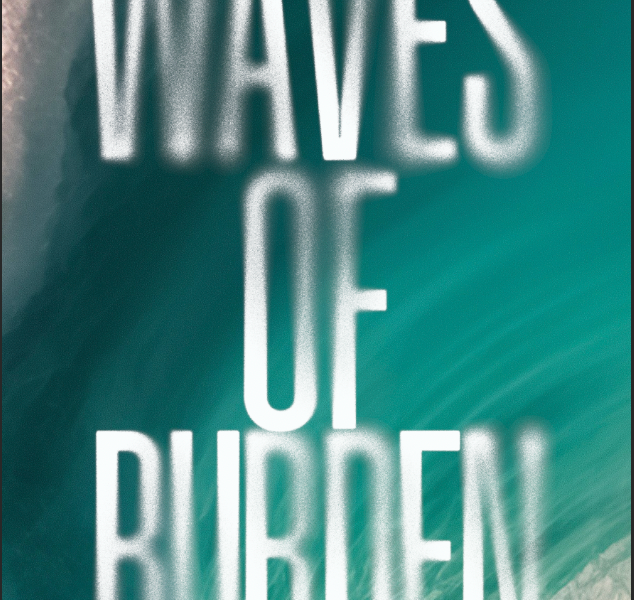
Curtis Ippolito’s Waves of Burden (from Rock and a Hard Place Press) is an excellent new entry in this subgenre. Set in San Diego, California, during the middle of the COVID pandemic (2022), the novel tells the story of Drew Jones, a dry-wall contractor who’s trying to make a living while his wife, Gaby, is pregnant with their first child. Drew is a former foster child, who forged a connection with another foster kid, Jake. While not biologically related, Drew and Jake still consider each other brothers. Both were placed in a home with one of San Diego’s most respectable couples, the Millers, who were later raided by the FBI and charged with smuggling migrants and drugs.
This contrast between Drew’s perception of who he thought his foster parents were and who they turned out to be, sadly, takes on new resonance when Jake returns to San Diego following a two-year absence. He’s been hitchhiking around the country, living on the open road. At first, their reunion is everything Drew hopes it would be. Sure, Jake needs to borrow some cash, but he’s willing to work for it—helping Drew with a new construction job. Jake is Drew’s bridge from his difficult past to his hopeful present, a reminder of where he came from and where he’s going.
But as is inevitable in noir fiction, everything is turned on its head in the flash of a gun muzzle.
It begins when Drew drives Jake to Happy Time Liquor on the way home from work. Drew stays in his van while Jake goes inside. It’s not the first time either has been in this store. Drew, in fact, knows the clerk. Jake’s first visit the day before revealed some possible shady goings-on in a back room. But this visit ends in bloodshed. Jake rushes into Drew’s van with his clothes splattered with blood, his backpack clutched in his hands, all the while pleading that they drive off. Jake tells him there was a robbery. The clerk shot a guy. Jake can’t be here when the cops arrive—he has some warrants from his wanderings. Drew ultimately does as his brother asks and leaves the scene. He later tells his wife, and she seems more understanding than a lot of partners might be. They watch the news, and it at first appears as though this incident might pass them by like a cool ocean breeze.
But, again, this is noir fiction. And no one gets away clean.
Soon, Drew discovers that not all is what Jake first said it was. Remember the possibly shady things happening at Happy Time Liquor? Well…that turns out to be an understatement. And the people behind these shady dealings are not only looking for Jake but a hundred grand in cash.
The trajectory of Drew’s happy life by the sea is now met with its starkest of contrasts: A terrifying future where he will be forced to make terrible choices. Between the man he wants to be and the man he is willing to be. All for the people he cares about the most.
In this way, Waves of Burden is like many great noir stories, in that it is first and foremost a character study in morality. Ippolito’s novel succeeds because of its characters. Sure, the plot has exciting crime elements. But it is Drew, Jake, and Gaby who are the reason to keep turning the pages.
Ippolito’s ability to turn the San Diego setting into one that leaps off the page through descriptive tours of its various locales further elevates this story. It’s clear that Ippolito has taken many of the drives that his protagonist takes. And each descriptive passage not only renders realistic snapshots of this paradise by the sea but underscores the connection between these characters and this unique place. These passages recalled for me one of the best location tours in all of noir literature, Chapter 13 of Raymond Chandler’s The Little Sister. High praise, for sure. But genuine and deserved.
This is not to say that Waves of Burden will resonate with all crime fiction fans. It is a slow burn story that takes its time with its characters and their arcs. It’s not until almost page 50 that we get to the inciting incident at the liquor store. And this moment happens off the page. This latter aspect is crucial to the story, though. Drew—who was not an eyewitness to the event—will later question the various versions he’s told by different people over the course of the story. But for readers looking for a novel that starts off with a bang and doesn’t let go, this is not it.
Still, Waves of Burden is well worth your time and consideration. The pace of its opening chapters may not be for everyone, but it serves its story and its character well. Ippolito’s novel is one of the more original and satisfying books that I’ve read this year. It will likely end up on many best-of lists, and for good reason. Also, I wouldn’t be surprised to see it nominated for several awards.
Waves of Burden by Curtis Ippolito is now available from Rock and Hard Place Press: https://www.rockandahardplacemag.com/waves-of-burden
#
Casey Stegman lives in North Carolina. His fiction has been published by Tough, Mystery Tribune, Shotgun Honey, Dark Yonder, Cowboy Jamboree, Bristol Noir, and Punk Noir Magazine. Most recently, his story “Effie’s Oasis” was included in The Best Mystery Stories of The Year 2025, guest edited by John Grisham.